Quartzite is a sedimentary rock composed mainly of quartz. Quartz is one of the hardest minerals found in the Earth's crust. Quartzite can be found in various colors, depending on the presence of other minerals in the stone’s composition.
Quartzite is a sedimentary rock composed mainly of quartz. Quartz is one of the hardest minerals found in the Earth's crust. Quartzite can be found in various colors, depending on the presence of other minerals in the stone’s composition. Generally, it is known for its light tones, with distinctive shades of white, grey and beige.
Quartzite forms when quartz sand, made up of silicon dioxide crystals, is subjected to intense heat and pressure. This process often occurs during mountain formation, where rock layers are compressed and exposed to high temperatures and pressure.
Due to its unique mineral composition, quartzite often contains visible cracks that typically enhance its visual appeal without compromising the stone’s strength or durability.
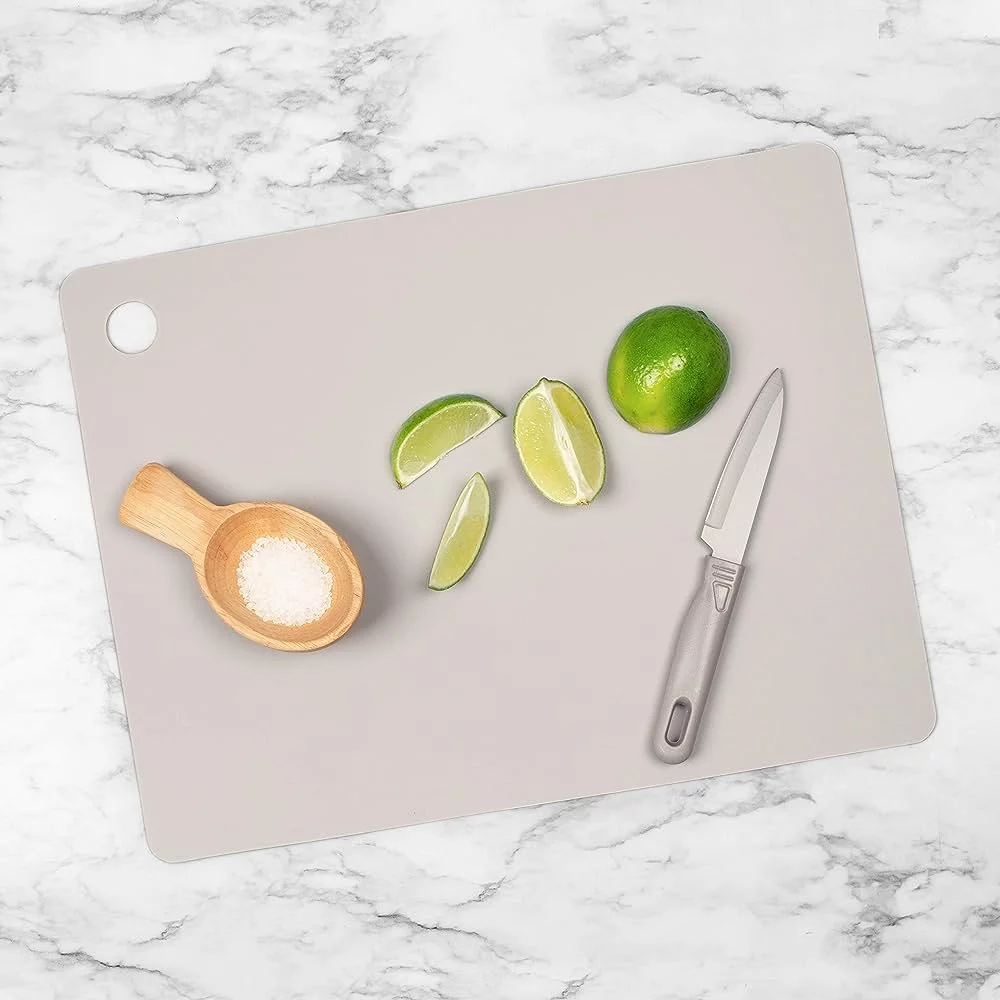
Quartzite differs from granite and engineered stone due to its softer characteristics, which is why we recommend using cutting boards when preparing food on its smooth surface. It is also important to avoid dragging heavy objects across the quartzite surface to prevent potential scratches.
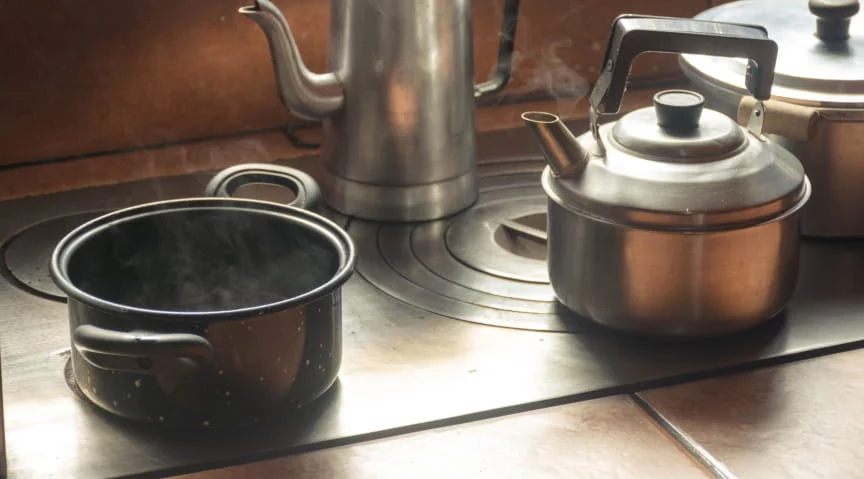
Like granite, both marble and quartzite are heat-resistant and placing pots or pans directly on the surface will not damage it. Nevertheless, it is always recommended to use a trivet or place a spoon handle between the hot pan and the stone to help diffuse the radiant heat.

Quartzite is porous and stains may form if oil or liquid soap seeps into its microscopic pores. Sealing the surface with a designated product helps protect the stone from staining.

A true quartzite primarily contains calcium carbonate, which reacts with acids (such as fruits, juice, soda, coffee, alcohol, salad dressing, etc.).
When such an acidic liquid comes into contact with the surface, it begins to etch the marble. As a result, the marble loses its shine, leaving behind a lighter, dull spot. To prevent this, any spilled liquids should be wiped off the surface immediately.
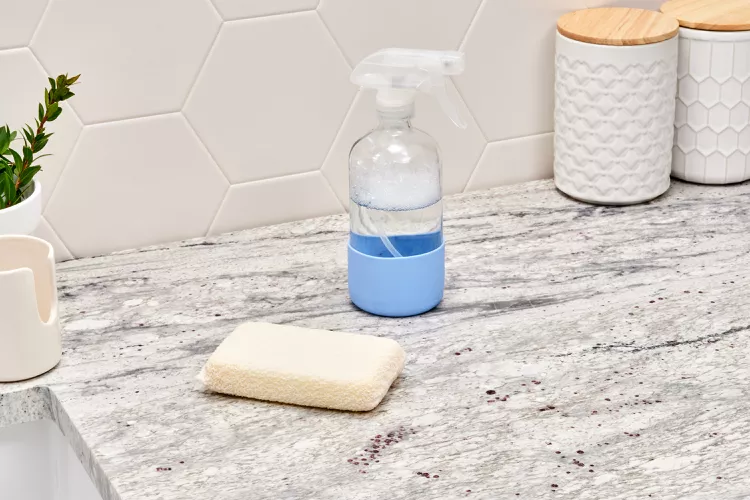
For daily cleaning of a quartzite surface, use a damp (microfiber) cloth, warm water and if necessary, a neutral (pH 7) or mildly alkaline (pH 8–10) cleaning agent. It’s best to choose products specifically designed for natural stone, but dish soap or glass cleaner (e.g. Frosch) is also suitable for everyday care. Avoid using cleaners that contain acids or bleach.
The stone surface is also sensitive to abrasive materials—micro-damage can be caused by a steel sponge or even a stray grain of sand caught on a cleaning cloth.
All surfaces have been treated with a sealing agent to ensure long-lasting durability by preventing liquids from penetrating the stone. Depending on the level of use and the type of quartzite, we recommend reapplying the impregnating treatment at least once a year using a sealer specifically designed for quartzite.
Quartzite is a porous material with high water absorption, requiring careful handling and protection against dirt. Avoid exposing the surface to chemicals and corrosive substances. Extra caution should be taken with everyday items like coffee and tea, oils and acidic fruits. We recommend removing any stains immediately using paper towels, water and detergent to prevent dirt from drying or penetrating the stone. For tougher stains, use cleaners specifically designed for quartzite. After using such products, rinse the work surfaces again with water and detergent. For advice on suitable products, please contact your stone supplier.
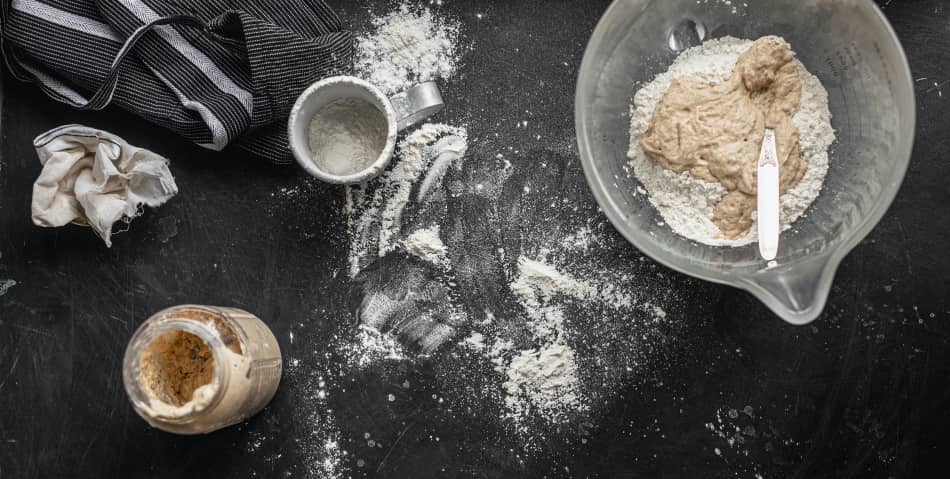
Since quartzite is softer and more porous than granite, its surface scratches quite easily. Therefore, cutting boards should always be used when working in the kitchen. To prevent damage, we also recommend using trivets when placing hot cookware on quartzite surfaces.